Blocked Drains Boronia
Overflowing gully, gurgling toilet or a sink that will not drain? We clear blocked drains across Boronia with high-pressure jetting, then show you the cause on camera. Ring 03 8804 5837.
- Licensed Victorian plumbers
- Based in Boronia, City of Knox
- Price agreed before work
- Night and weekend call-outs
Water where it should not be? Call now
Burst pipe, sewage coming up a gully, or no water at all? Turn the water off at the meter if you can, then ring. A licensed plumber answers and tells you what happens next.
Signs your drain is blocked
A blocked drain rarely fails all at once. Most give you a few weeks of warning, and catching them early usually means a quicker, simpler job.
- Water draining slowly from the shower, bath, basin or kitchen sink.
- Gurgling from a floor waste or basin when the toilet is flushed or the washing machine empties.
- The toilet bowl filling higher than normal before it drains away.
- Water bubbling up through the gully trap grate outside, or the grate lifting.
- A sewage smell near the gully, around the inspection openings or under the house.
- Wet, lush or sunken patches of lawn along the line of the sewer.
- Several fixtures backing up at once, which usually means the blockage is in the main line, not a single branch.
If only one fixture is slow, the blockage is probably close to that fixture: a basin waste full of hair, a kitchen sink trap full of fat, or a toilet with something lodged in the pan. If everything in the house is slow, or water is coming out of the gully, the problem is further down the line, and that is where Boronia's clay pipes and tree roots come in.
Why Boronia drains block
Clay sewer pipe
Most Boronia homes built before the late 1980s were connected to the sewer with vitrified clay pipe. It is a strong material, but it comes in short lengths of around 600 millimetres to a metre, so a typical house drain has dozens of joints. Early joints were sealed with mortar, which cracks; later ones used rubber rings, which can be pushed out of shape when the ground moves. Every joint is a weak point where roots, silt and water can get through.
Reactive clay soil
Boronia and much of Knox sit on heavy clay that swells when wet and shrinks when dry. Over decades, that movement pushes clay pipe joints out of alignment, cracks collars and creates dips where the pipe has settled. A dip, called a belly, holds water and waste instead of letting it flow, and eventually traps enough debris to block.
Tree roots
The trees are part of what makes Boronia beautiful, from the tall eucalypts on the hill streets to the liquidambars, elms, willows, figs and pittosporums in older gardens. Roots seek water and nutrients, and a leaking sewer joint offers both. Fine roots enter through the smallest gap, then thicken into mats that catch toilet paper, wipes and fat. In some lines we pull out roots as thick as a wrist.
Wipes, fat and foreign objects
"Flushable" wipes do not break down the way toilet paper does. They snag on roots and joints and build up into a dense plug. Cooking fat poured down the kitchen sink cools, sets and coats the pipe walls. Children's toys, cotton buds, sanitary products, dental floss and even small toothbrushes turn up in our jetter regularly.
Stormwater debris
Stormwater drains collect leaves, bark, silt and garden mulch. On sloping blocks, water rushes downhill carrying debris into pits and strip drains, where it settles and compacts. We cover stormwater in more detail on our stormwater drainage page.
How we clear blocked drains
Step one: find the right access point
We locate the nearest inspection opening, gully trap or overflow relief gully to the blockage. Many Boronia homes have inspection openings that have been buried by garden beds, paving or decking. If we cannot find one, we can use the gully trap or remove a toilet pan to get into the line.
Step two: clear the line
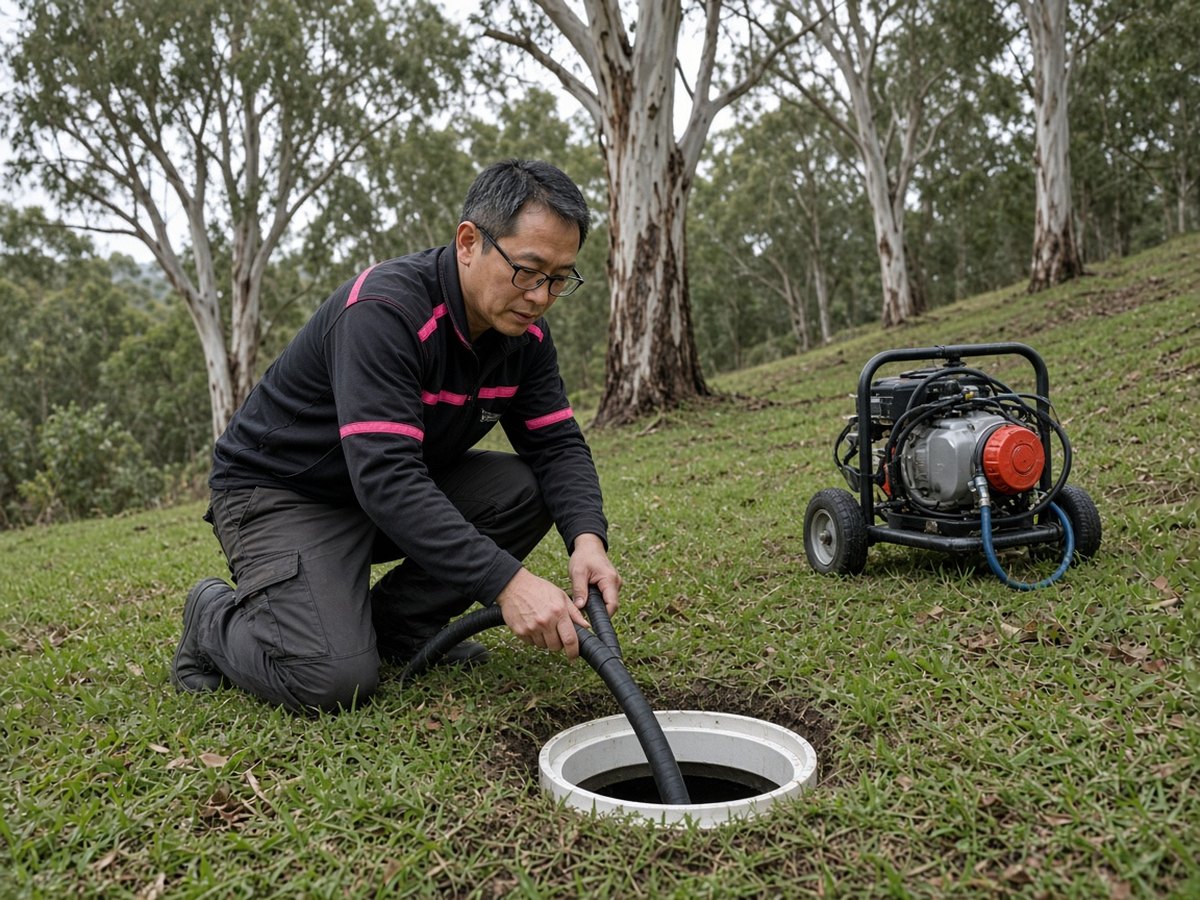
For most sewer blockages we use a high-pressure water jetter. A flexible hose with a specialised nozzle pushes forward into the pipe, with rear-facing jets that scour the walls and drive debris back toward the access point. Jetting cuts through fat, silt and fine roots and leaves the pipe clean rather than just punching a hole through the blockage.
For heavy root masses, we may use a drain machine with cutting heads first, then follow up with the jetter to flush out the debris.
For basin, shower and kitchen sink blockages, we often clear the trap and branch line by hand or with a small drain machine, without needing the big gear at all.
Step three: camera inspection
Once the line is flowing, we push a CCTV drain camera through it. You watch the monitor with us and see what we see: roots at a joint, a cracked or broken section, a belly holding water, a pipe that has shifted, or simply a clean pipe with no damage. The camera has a locator, so we can mark the exact position and depth of any fault on the ground above it.
This step matters, because it tells you whether the blockage was a one-off or a sign of a pipe that is going to keep blocking. Clearing roots without knowing why they got in usually means paying to clear them again next year.
Step four: options and advice
If the pipe is sound, we may simply recommend keeping wipes and fat out of the drains. If roots are getting in through a damaged section, the options usually include:
- Regular maintenance jetting, for lines that are serviceable but prone to roots.
- Spot repair, digging up and replacing a single damaged section.
- Pipe relining, which creates a new pipe inside the old one without digging up driveways, paths and gardens. See our camera and relining page.
- Full replacement, for lines that have collapsed or are too badly damaged to reline.
We give you a firm price for each option so you can decide.
Kitchen sink blockages
Kitchen sinks block because of fat, oil, food scraps and coffee grounds. Dishwashers can make it worse by sending hot, greasy water that cools and sets further down the line. If the kitchen sink is slow but other fixtures drain fine, the blockage is usually in the trap or the branch line between the sink and where it joins the main drain. We clear it and check the trap and waste fittings for leaks while we are there.
Toilet blockages
A single blocked toilet is often caused by too much paper, wipes, or something dropped in the bowl. If the toilet blocks repeatedly, or other fixtures gurgle when it flushes, the problem is likely further down the sewer. Older low-flush toilets and pans with poor internal shapes are also more prone to blocking. We clear the blockage, check the line and, if the pan itself is the problem, can supply and fit a new toilet.
Shower, bath and basin blockages
Hair, soap scum and shampoo residue form a sticky mat that narrows the waste pipe. Most bathroom blockages are close to the fixture. Repeated blockages in older bathrooms can be caused by undersized waste pipes, poor falls or old galvanised wastes that have rusted rough inside.
Floor waste and laundry trough blockages
Lint from washing machines builds up in laundry wastes, particularly in older homes where the trough and washing machine share a small waste. A floor waste that overflows when the machine empties usually means a blockage further along the line.
Gully trap overflows
The overflow relief gully outside your house is designed to let sewage overflow outside rather than inside if the line blocks. If water is coming up through the gully grate, the sewer is blocked downstream. Stop using fixtures and ring us. Do not raise the gully grate or seal it, because then the overflow will come up inside instead.
Gully traps can also overflow because surface water is getting in, which is common on Boronia's sloping blocks when the gully sits at a low point. That adds stormwater to the sewer, which is not allowed and can cause the problem to recur. We can raise the gully riser or regrade the surrounding area so rainwater runs away from it.
Units and shared sewer lines
In many Boronia unit developments, several dwellings share one sewer connection to the main. A blockage in the shared section affects every unit upstream, and the unit at the lowest point usually overflows first. We locate the blockage, clear it and identify whether it sits in a private branch or the common line, so the owners corporation and residents know where responsibility lies. We can provide camera footage and a written report for the body corporate.
Blockages in the water authority's sewer
Your property drain connects to the main sewer, which belongs to the water corporation. If our camera shows the blockage is in the main or at the point where your line joins it, we will tell you, and you can report it to the water corporation to fix. If the problem is in your property drain, it is your responsibility, even if the roots belong to a street tree.
A typical Boronia drain job
Here is a job that sums up what we see most weeks. A 1970s brick veneer off Boronia Road, three bedrooms, a big lemon-scented gum in the back corner. The owners noticed the shower gurgling for about a month, then one Sunday the gully trap by the laundry door overflowed when the washing machine emptied.
We jetted the line from the gully and pulled out a mat of fine roots mixed with wipes. The camera showed the cause: two joints about eleven metres out, under the lawn and right beside the gum, had been pushed apart by ground movement, and roots were growing straight through the gaps. The rest of the line was in fair shape.
The owners had three options: maintenance jetting each autumn, digging up and replacing the two joints, or relining that short section from the inspection opening without touching the lawn or the tree. They chose to reline. The line has not blocked since, and the gum is still standing.
Not every job ends that way, and sometimes jetting alone is the sensible answer. The point is that you see the footage and choose with the facts in front of you.
Renovations and blocked drains
Renovations often disturb old drains. A new deck built over an inspection opening, a driveway poured over the sewer, an extension built across the line, or a bathroom moved to a new spot with a long, flat waste run can all lead to blockages months later. If you are planning works, we can locate and camera the existing drains first, so the builder knows what is underneath and the new layout gets proper falls and access points.
Preventing blocked drains
- Use only toilet paper in toilets. Bin wipes, even those labelled flushable.
- Wipe greasy pans with paper towel before washing, and put fat in the bin.
- Use a strainer in the kitchen sink and a hair catcher in the shower.
- Do not plant large trees over the sewer line. If you are not sure where it runs, we can locate it.
- Keep inspection openings and gully traps accessible and clear of garden beds.
- If you have had root blockages before, book a maintenance jetting before winter.
What it costs to clear a blocked drain
We do not quote prices online because blocked drains vary enormously. A blockage a metre from the gully is a short job. A root mass under the driveway in a broken clay pipe is a different problem entirely. When you ring, we explain how the job is charged, and on site we tell you the price before we start. If we find damage that needs a bigger repair, we show you on the camera and quote it separately.
Blocked drains across Knox
We clear blocked drains in Boronia every week, and across Bayswater, Wantirna, The Basin, Ferntree Gully, Upper Ferntree Gully, Knoxfield, Sassafras and Heathmont. Many of these suburbs share the same story: clay pipes from the 1960s and 1970s, reactive soil and big established trees. We know where the old lines run and what to expect when we open the gully.
Blocked drains in commercial premises
Cafés, takeaways and shops around Boronia Junction and along Dorset Road and Boronia Road deal with their own drain problems: grease from kitchens, paper towel in staff toilets, and older shared sewer lines behind shopfronts. We clear commercial drains, camera inspect them and give you a report for the landlord. Where food businesses have grease traps, we can check the inlet and outlet lines and arrange regular maintenance so the drains keep flowing between pump-outs.
Read this first
What you get with blocked drains
- In the van
- Drain camera and locator, high-pressure jetter, drain machine, acoustic leak detector, thermal camera, pressure gauges
- Licensing
- Victorian licences for water supply, sanitary, drainage and roofing
- Quoting
- Cause explained and price agreed before work, written quotes for larger jobs
- Parts
- WaterMark-certified fittings and products that meet Australian Standards
- Certificates
- Compliance certificates for regulated plumbing work, photos for your records or insurer
- Leaving
- Old parts removed, the work area cleaned and everything tested with you
Send us the job details
Send the details and a licensed plumber from Boronia will call you back. Water flooding or a sewer overflowing? Do not wait for a reply, ring 03 8804 5837 now.
Every job is quoted on what we actually find. That is why you will not see a price list on this site.
Blocked Drains in Boronia: questions
How do I know if my main sewer line is blocked?
If more than one fixture is slow or gurgling, or water is coming up through the gully trap outside, the blockage is probably in the main line rather than a single fixture.
Will you dig up my yard to clear a drain?
Almost never. We clear drains from existing access points using a jetter or drain machine. Digging is only needed if a section of pipe is collapsed and relining is not suitable.
Do you use a camera on every blocked drain?
We recommend a camera inspection whenever a sewer has blocked from roots or keeps blocking, so you know whether the pipe is damaged. For a simple basin or sink blockage it is not usually needed.
Can tree roots be stopped from coming back?
Jetting removes them, but they return if the pipe is cracked. A lasting fix means repairing or relining the damaged section so roots cannot get in.
Should I use drain cleaning chemicals?
We do not recommend them. They rarely clear a real blockage, can damage older pipes and seals, and are hazardous for the plumber who has to clear the drain afterwards.
Whose responsibility is a blocked sewer?
The property owner is responsible for the drain from the house to the connection point. The water corporation is responsible for the main sewer. We can tell you which side the blockage is on.
Do you clear blocked stormwater drains too?
Yes. We clear blocked pits, strip drains, downpipes and stormwater lines, and can camera inspect them to find damage.
How long does it take to clear a blocked drain?
Most blocked drains are cleared in one visit. Heavy root blockages and camera inspections take longer, and we tell you what to expect before we start.
Local, careful and upfront
Sloping blocks, heavy clay, gum and elm roots in old earthenware sewers, 1970s brick veneers and newer townhouse rows: Boronia plumbing has its own habits and we know them.
Cause and cost before work starts. If something changes once a wall or a drain is open, we stop and talk it through with you.
Camera inspections, high-pressure jetting, acoustic and thermal leak detection, pressure testing. We look before we dig.
Water supply, sanitary, drainage and roofing work by licensed plumbers, with compliance certificates lodged where the law needs them.
More plumbing services around Boronia
Suburbs we cover from Boronia
We are based in Boronia and work the Knox side of the Dandenong foothills: Bayswater and Wantirna to the north and west, The Basin and Sassafras up the hill, Ferntree Gully, Upper Ferntree Gully and Knoxfield to the south, and Heathmont over the Maroondah line. Somewhere else nearby? Ring 03 8804 5837 and ask.
Plumbing problem in Boronia?
Ring a local licensed plumber. You hear the price before any work starts.