Hot Water Repairs Boronia
No hot water, lukewarm showers, a dripping relief valve or a cylinder leaking from the base? We repair electric, solar and heat pump hot water systems across Boronia. Ring 03 8804 5837.
- Licensed Victorian plumbers
- Based in Boronia, City of Knox
- Price agreed before work
- Night and weekend call-outs
Water where it should not be? Call now
Burst pipe, sewage coming up a gully, or no water at all? Turn the water off at the meter if you can, then ring. A licensed plumber answers and tells you what happens next.
Hot water systems we repair
We work on the electric, solar and heat pump systems found in Boronia homes:
- Electric storage cylinders, the most common system in older Boronia houses, usually on a mains-pressure tank outside or in a laundry cupboard, often on an off-peak tariff.
- Solar hot water, with roof-mounted collectors and either a roof tank or a ground-mounted storage cylinder, boosted by electricity.
- Heat pump systems, which use a compressor and refrigerant to pull heat from the air into the water, using far less electricity than a standard element.
We repair the common brands and supply genuine or equivalent quality parts. If your system is beyond repair, our hot water replacement and heat pump pages explain the options.
Common hot water problems
No hot water at all
On an electric storage unit, the usual suspects are a failed element, a thermostat that has stopped calling for heat, a tripped over-temperature cut-out, or a problem with the power supply to the unit. Off-peak tariffs can confuse things: if the unit only heats overnight and the timer or controlled load circuit has a fault, you might have hot water some days and not others.
Before you ring, check the switchboard. Hot water units usually have their own circuit breaker, sometimes labelled "HWS" or "off peak". If it has tripped, reset it once. If it trips again, leave it off and call us, because something in the unit is shorting to earth and needs a plumber or electrician.
Lukewarm water or running out quickly
A unit that produces warm but not hot water, or runs out much sooner than it used to, may have a failing element or thermostat, a thermostat set too low, a heavy build-up of sediment in the base of the tank, or a faulty tempering valve mixing in too much cold. On solar systems, it can be a booster that is not switching on, or a pump or sensor fault on split systems. On heat pumps, it can be a fan, compressor or refrigerant problem, or simply a unit sized too small for the household.
Water too hot
Scalding water at the tap is dangerous, particularly for children and older people. It usually means a failed tempering valve, a thermostat stuck on, or a system that was never fitted with a tempering valve in the first place. Victorian rules require hot water delivered to bathrooms in new installations and replacements to be limited to 50 degrees, while the tank itself must store water at 60 degrees or more to control bacteria. A working tempering valve does that blending for you. See our guide to hot water temperature and tempering valves.
Dripping or pouring relief valve
Every mains-pressure storage unit has a temperature and pressure relief valve near the top. It is normal for it to release a small amount of water while the unit heats, because water expands. It is not normal for it to pour constantly or run all day. That usually means the valve has worn out, mains pressure is too high, or the unit is overheating. Relief valves should be replaced every five years or so. If pressure is the problem, we fit or replace the pressure limiting valve at the meter or the cold water expansion control valve on the unit.
Leaking from the base of the tank
If water is coming from the base of the cylinder or from under the outer jacket, and not from a fitting or valve, the inner tank has usually corroded through. There is no lasting repair for a leaking tank. We isolate it so you still have cold water, and quote you a replacement. Leaks from inlet and outlet fittings, the drain cock or the valves can usually be repaired.
Rumbling, banging or hissing
Sediment builds up in the base of storage tanks over time, particularly in older units that have never been flushed. As the element heats the water under the sediment, it can crackle, pop or rumble. Hissing can mean water is dripping onto a hot element or the relief valve is releasing. Banging when taps close is usually water hammer, which is a pressure issue rather than a hot water fault.
Rusty or smelly hot water
Brown water from the hot tap often means the sacrificial anode inside the tank has been used up and the tank itself is starting to corrode. A rotten-egg smell can come from a reaction between the anode and certain water conditions. Replacing the anode early can add years to a tank's life. Left too long, the tank corrodes and leaks.
The sacrificial anode: the part nobody checks
Most storage cylinders have a sacrificial anode, a long rod of magnesium or aluminium that screws into the top of the tank. It corrodes slowly instead of the steel tank. Once it is gone, the tank starts to rust. Manufacturers generally suggest inspecting the anode every five years, more often in some water conditions. In Boronia, many tanks are fifteen years old and have never had the anode checked, and we regularly replace tanks that could have lasted years longer with a simple anode change. If your unit is between six and ten years old and has never been serviced, ask us about an anode inspection.
Solar hot water problems
Solar systems on Boronia roofs face some specific challenges. Leaves and bark from gums can shade or dirty collectors and block the drainage on roof tanks. Frost on cold foothills nights can damage collectors that do not have frost protection or where the protection valve has failed. On split systems with a ground tank, the circulating pump, the controller and the temperature sensors all need to work for the system to collect heat. A booster element that has failed leaves you relying on sunshine alone, which in a Boronia winter is not enough.
We check the whole system: collectors, pipework insulation, frost valves, pumps, controllers, sensors, the tank and the booster. Often the repair is simple once the fault is traced.
Heat pump repairs
Heat pumps are mechanical systems with a fan, compressor, evaporator and controls. Common faults include fans that are noisy or seized, ice building up on the evaporator in very cold weather, error codes on the controller, and sensors or valves that have failed. Some faults can be fixed on the spot; others need parts or a refrigeration-licensed technician. We diagnose the fault and arrange the right repair. If the unit is old and the repair is major, we will tell you whether replacement makes more sense.
Repair or replace?
We always look at repair first. A new element, thermostat, relief valve or anode can give a healthy unit years more life. But there are times when repair is poor value:
- The inner tank is leaking.
- The unit is more than twelve to fifteen years old and needs a major part.
- Parts are no longer available for that model.
- The unit is undersized for the household and always running out.
- Energy costs are high and a more efficient system would pay for itself.
We give you a firm price for the repair and, if it makes sense, a price for replacement, so you can compare.
Servicing your hot water system
Most people only think about their hot water unit when it stops. A service every few years can catch the small things before they turn into a cold shower or a flooded laundry. A typical service on a storage unit includes:
- Checking and, if needed, replacing the temperature and pressure relief valve.
- Inspecting the sacrificial anode and replacing it if it is worn.
- Flushing sediment from the base of the tank where the design allows.
- Checking the cold water expansion control valve, the pressure limiting valve and the isolating valve.
- Testing the tempering valve and the temperature at the bathroom tap.
- Looking over the electrical cover, the element seal and the pipework for signs of leaks.
On solar systems we also check the collectors, frost protection and circulation, and on heat pumps we clean the evaporator, check the fan and condensate drain, and read any stored fault codes.
Hot water in units and townhouses
Boronia's newer townhouses and units often have hot water squeezed into tight spaces: a laundry cupboard, a meter box recess, a roof space or a narrow strip between the garage and the fence. That affects how easy a unit is to service and what can replace it. Internal units must have a safe tray and a drain so a leak does not flood the floor. If your unit is inside and has started to leak, turn off the cold water valve straight away and ring us.
Where several units share a building, hot water can also be part of a shared system or run on a separate meter. We can work out what you have, who is responsible for it and what your options are.
Off-peak and controlled load
Many Boronia homes run their electric storage unit on an off-peak or controlled load tariff, so it heats only at certain times. If the controlled load circuit or timer fails, or if the unit's capacity is too small for a full day's use, you can run out of hot water by the evening. We check whether the problem is the hot water unit itself or the supply to it. Where the fault is electrical, we will tell you and you can call your electrician or the network.
Safety first
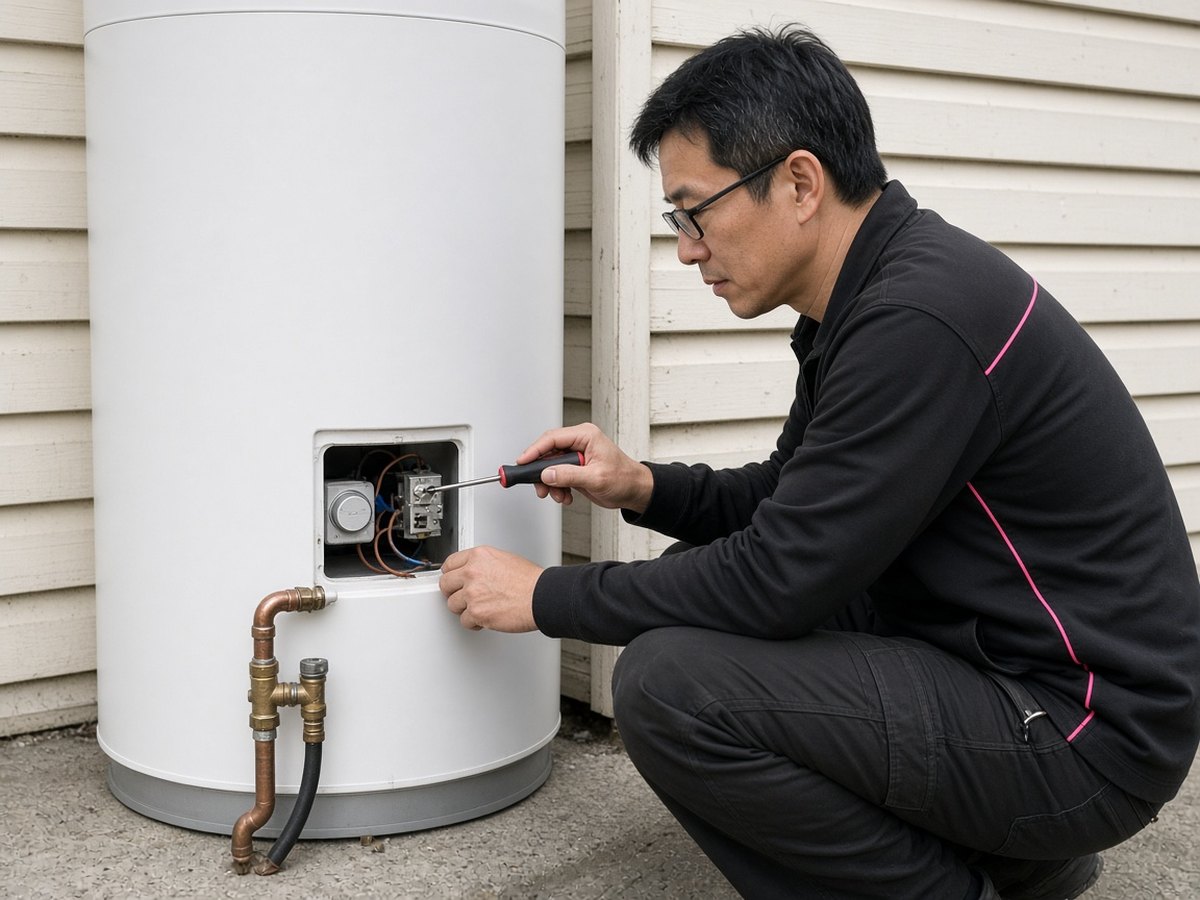
Hot water units combine mains pressure, high temperatures and electricity. Please do not open the electrical covers on a storage unit, adjust the thermostat yourself or remove the relief valve. If the relief valve has not been lifted in a while, you can lift the lever gently every six months to make sure it releases freely, then let it snap back. If it will not reseat and keeps running, call us.
What we do on a hot water call-out
- Ask a few questions on the phone: what type of unit, how old, what is happening, and whether the circuit breaker has tripped.
- Check the power supply, thermostat settings and elements on electric units, and the controls, pumps, sensors and boost on solar and heat pump systems.
- Inspect the relief valve, tempering valve, pressure limiting valve and cold water valves.
- Look for leaks at the tank, fittings and pipework.
- Explain what has failed, give you a firm price to fix it, and carry out the repair once you approve it.
- Test the system and check the temperature at the tap.
Hot water repairs around Boronia
We repair hot water systems throughout Boronia and the nearby suburbs: Bayswater, Wantirna, The Basin, Ferntree Gully, Upper Ferntree Gully, Knoxfield, Sassafras and Heathmont. Most of the systems we see are electric storage units installed in the 2000s and early 2010s, with a growing number of heat pumps installed over the past few years. We carry common parts in the van so many repairs are finished on the first visit.
Before you call
These quick checks can save you a call-out:
- Check the circuit breaker for the hot water unit at the switchboard.
- On an off-peak unit, ask whether anyone has changed the tariff or meter recently.
- Look at the relief valve drain to see whether water is running.
- Check the base of the unit for water.
- Note the brand, model and manufacture date from the compliance label on the side. It helps us bring the right parts.
Hot water and your energy bill
Hot water is often one of the largest energy costs in a Boronia home, and an ageing system quietly gets worse. Sediment insulates the water from the element, so it runs longer to heat the same amount. A thermostat set higher than needed, a dripping hot tap or a relief valve releasing water every cycle all add up. When we repair a system, we check the settings, the tempering valve and the obvious waste points, and we tell you if a few simple changes, such as fixing a dripping hot tap or adjusting timer settings on a heat pump, would make a difference.
If your system is nearing the end of its life anyway, it is worth comparing the running cost of a like-for-like electric replacement with a heat pump before it fails, rather than deciding in a hurry on a cold morning with no hot water. Our guide comparing heat pump and electric hot water sets out the trade-offs.
Read this first
What you get with hot water repairs
- In the van
- Drain camera and locator, high-pressure jetter, drain machine, acoustic leak detector, thermal camera, pressure gauges
- Licensing
- Victorian licences for water supply, sanitary, drainage and roofing
- Quoting
- Cause explained and price agreed before work, written quotes for larger jobs
- Parts
- WaterMark-certified fittings and products that meet Australian Standards
- Certificates
- Compliance certificates for regulated plumbing work, photos for your records or insurer
- Leaving
- Old parts removed, the work area cleaned and everything tested with you
Send us the job details
Send the details and a licensed plumber from Boronia will call you back. Water flooding or a sewer overflowing? Do not wait for a reply, ring 03 8804 5837 now.
Every job is quoted on what we actually find. That is why you will not see a price list on this site.
Hot Water Repairs in Boronia: questions
Why have I got no hot water?
On electric units, the most common causes are a tripped circuit breaker, a failed element or a faulty thermostat. Check the switchboard first. If the breaker trips again after resetting, leave it off and ring 03 8804 5837.
Is it normal for the relief valve to drip?
A small amount while the unit heats is normal. Constant running or pouring water is not, and usually means the valve is worn or mains pressure is too high.
Can a leaking hot water tank be repaired?
If the inner tank is leaking, no. It needs replacing. If the leak is from a valve or fitting, it can usually be repaired.
How long do hot water systems last?
Electric storage units often last ten to fifteen years, longer with regular anode checks. Heat pumps and solar systems vary with the brand and maintenance.
What temperature should my hot water be?
The tank should store water at 60 degrees or more, and the tempering valve should limit bathroom water to 50 degrees in most installations.
Do you repair heat pump hot water units?
Yes. We diagnose heat pump faults and repair fans, sensors, valves and controls, and arrange specialist refrigeration repairs where needed.
Do you repair solar hot water?
Yes. We repair collectors, frost valves, pumps, controllers, sensors and boosters on solar hot water systems.
How quickly can you fix my hot water?
Many repairs are done on the first visit because we carry common elements, thermostats and valves. If a part has to be ordered, we tell you how long it will take.
Should I flush sediment from my hot water tank?
On many storage units, periodic flushing helps, but the drain valve and design vary. We flush tanks as part of a service and can show you whether your unit suits it.
Why does my hot water smell like rotten eggs?
A reaction between the anode and certain water conditions can cause it. Changing the anode type usually fixes the smell.
Local, careful and upfront
Sloping blocks, heavy clay, gum and elm roots in old earthenware sewers, 1970s brick veneers and newer townhouse rows: Boronia plumbing has its own habits and we know them.
Cause and cost before work starts. If something changes once a wall or a drain is open, we stop and talk it through with you.
Camera inspections, high-pressure jetting, acoustic and thermal leak detection, pressure testing. We look before we dig.
Water supply, sanitary, drainage and roofing work by licensed plumbers, with compliance certificates lodged where the law needs them.
More plumbing services around Boronia
Suburbs we cover from Boronia
We are based in Boronia and work the Knox side of the Dandenong foothills: Bayswater and Wantirna to the north and west, The Basin and Sassafras up the hill, Ferntree Gully, Upper Ferntree Gully and Knoxfield to the south, and Heathmont over the Maroondah line. Somewhere else nearby? Ring 03 8804 5837 and ask.
Plumbing problem in Boronia?
Ring a local licensed plumber. You hear the price before any work starts.